Artificial Intelligence (AI) has emerged as a defining force of the present era, increasingly embedded within technologies that shape everyday life. Teachers are also increasingly using AI in the classrooms. The Bharat Survey for EdTech (BaSE) 2025 conducted by CSF highlights that 51% of EdTech-using teachers have attended trainings or workshops related to the use of technology for teaching. Government-school teachers (55%) were more likely to have received such training than their private-school counterparts (41%).
However, the emphasis so far has been on broader technology use, with 29% of trainings focused on basic digital literacy, 20% on the safe use of technology, 19% on specific tools or devices, and only 9% on the use of AI tools.
AI Samarth is India’s first structured and contextualised initiative to build AI Literacy among students, teachers, and parents from underserved communities at scale. An expert-reviewed AI Literacy Curriculum Framework was designed in partnership with the Wadhwani School of Data Science and Artificial Intelligence (WSAI) at IIT Madras, alongside a high-quality, contextual Content Library of videos and teaching and learning materials as a public good. In less than two years since its launch, AI Samarth has reached ~2.6 million learners across government and affordable private schools (APS) across 10+ states in India.

AI Samarth National Convening of Teachers
AI Samarth reaches classrooms through a cascade-based model, with teacher capacity built via AI Samarth trainings delivered by Master Trainers. Teachers then bring the learning into their classrooms, making them central to delivering the curriculum into practice and sharing implementation insights back into the programme as it scales across states.
In this context, Central Square Foundation (CSF), in partnership with the Wadhwani School of Data Science and AI (WSAI), IIT Madras, hosted the “AI Samarth National Convening of Teachers on 3rd August 2026 at IIT Madras”. The gathering was anchored in two key objectives: enhancing the quality, relevance, and effectiveness of the content and on-ground implementation by leveraging teacher insights, and deepening the collective commitment of all stakeholders to scale AI Samarth across classrooms in India. Through teacher-led showcases, focused group discussions, and perspectives from IIT Madras and sector leaders, the convening created a structured forum to capture field insights and strengthen the AI Samarth on-ground implementation.


From AI Samarth to Classroom Practice
The convening brought together perspectives from academia and teachers on how AI Samarth is impacting classrooms across the country.
Stories of Change – Perspectives from the AI Samarth Classrooms
Teachers showcased how AI Samarth enabled them to meaningfully integrate AI into classroom practice, enriching learning experiences of students.
Soumya Ranjan Sasmal, a secondary school Science teacher from Odisha shared how AI turned a routine lesson into an engaging learning experience:
“I used Google Lens to help students identify plants and learn about their characteristics, turning a mundane class into an interactive lesson in observation. Students could then explore different plant species, compare them and ask questions, making them more curious about the world around them.”


Sridevi ji, a middle school Math teacher from Tamil Nadu shared how AI helped bring history to life, making school celebrations more engaging and authentic:
“I used AI to develop historically accurate costume ideas, character references and props for an Independence Day drama. It helped us bring the period to life with greater authenticity, while saving time on research and preparation. My students were also able to visualise the characters, making the performance more engaging and immersive.”


Khalil Ahmed, a middle school Sanskrit teacher from Madhya Pradesh shared how AI helped make Sanskrit more accessible and engaging for students:
“AI has helped me create lesson plans, creative stories and clear explanations of shlokas for my Sanskrit classes. For my Class 6 students, who are learning Sanskrit for the very first time, AI helped me create simple, picture-based content that turned an unfamiliar language into an exciting discovery experience. My advice to teachers is to use AI wisely as a teaching companion, not a replacement. It can make mistakes, but when used thoughtfully, it can become a valuable teaching tool.”

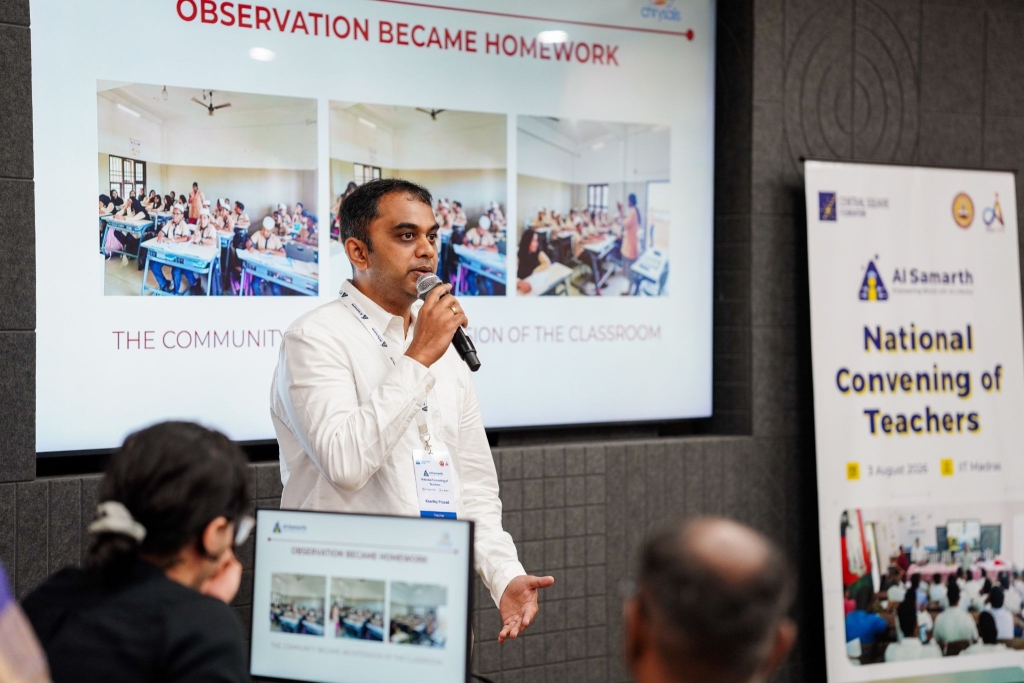
These experiences demonstrate how AI Samarth is supporting teachers to integrate AI meaningfully into classroom activities, enabling schools to make better use of the technology available to them.
Insights from the Focus Group Discussions
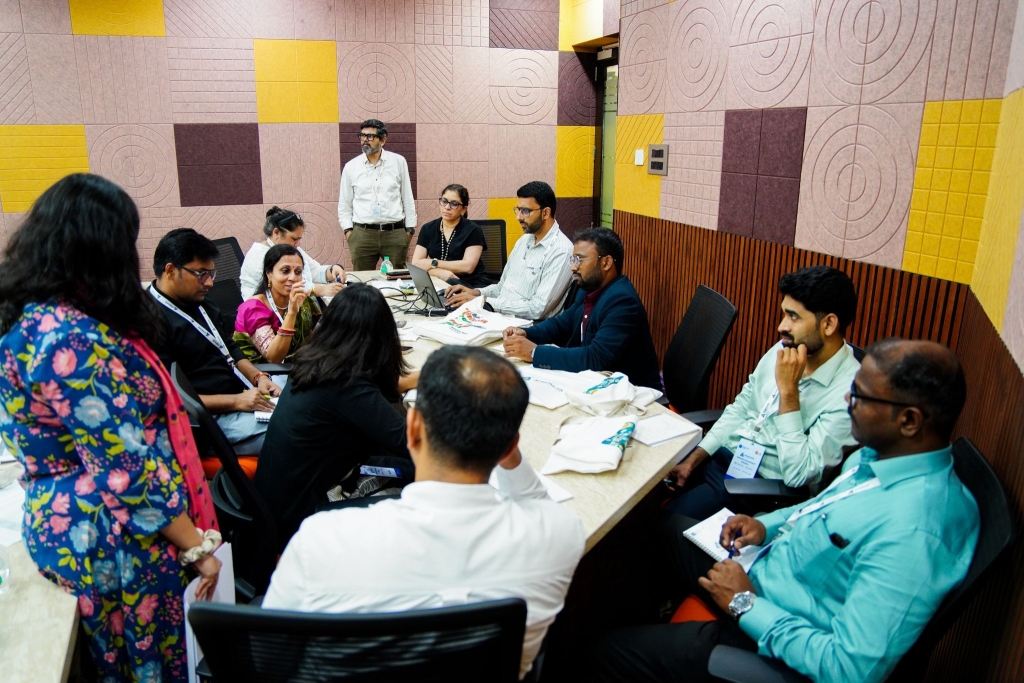
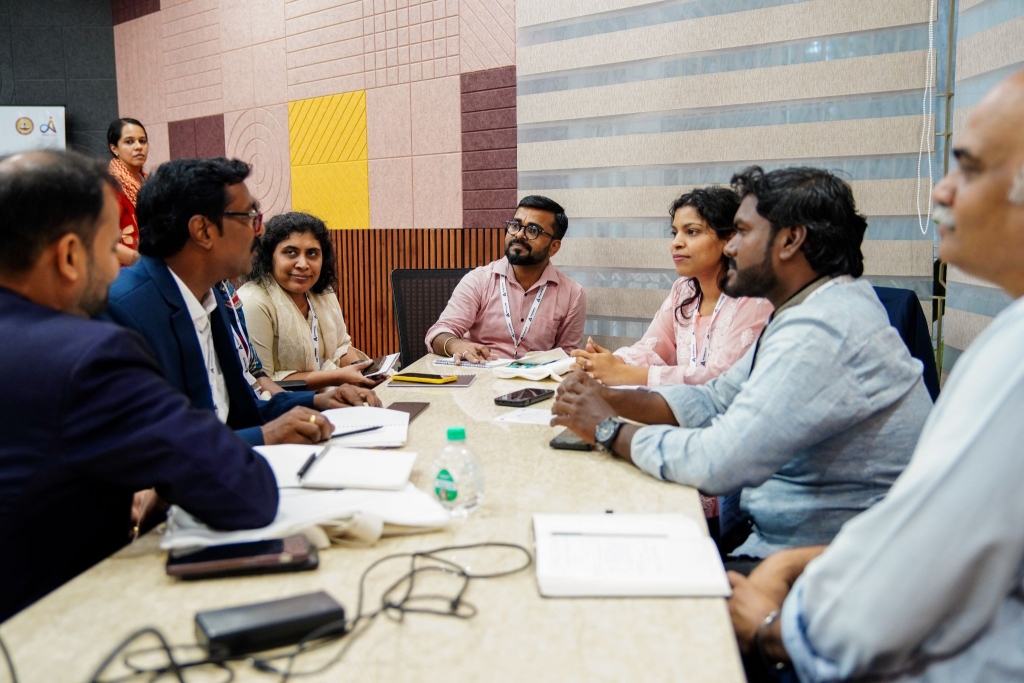
The focus group discussions were conducted to gather teachers’ perspectives on AI Samarth content and experiences on classroom delivery.
Reflecting on the contextual nature of the content, Manisa Mishra, a secondary school Science teacher from Odisha shared:
“The videos are localised using situations that are relatable to our students and teachers. For example, the content uses situations like going to the market and finding quality vegetables. These familiar situations help learners understand the concepts more easily.”
Alok Kumar Sinha, a secondary school Biology teacher from Jharkhand highlighted the use of familiar entry points and multimodal content:
“The AI Samarth curriculum is engaging because it introduces AI through familiar contexts from our daily lives, for example, search engines and navigation maps. The content is also presented through videos, PPTs and Lesson Plans, making the experience more interactive”
Teachers also shared how examples from agriculture, sports, and medicine helped students connect AI concepts to their own lives, with some even ideating with their teachers and proposing AI-enabled solutions to improve farming practices.
Practical classroom use emerged as a key priority, with teachers sharing how effective prompting could make AI more useful for students’ learning. Rakesh Pawar, a middle school teacher from Maharashtra, mentioned:
“A student once asked an AI tool for an explanation of a concept in V. S. Khandekar’s Yayati (Marathi literature), but found the response difficult to understand. Drawing on the prompting techniques learned through AI Samarth, the student refined the prompt, asking the AI tool to explain the chapter in simple words to a Class 6 student. This led to a simpler explanation that was easier for the student to understand.”
Keerthy Prasad, a middle school Computer Science teacher from Karnataka shared how practical use helped build confidence among teachers:
“I used an AI tool to organise the science fair, including planning stalls, assigning student roles and preparing supporting materials. The process gave me a great deal of confidence in using AI.”
Building a Scalable Model for AI Samarth
The convening demonstrated the value of bringing together academia, educators, and implementation partners to collaboratively shape the journey of AI Samarth. The experiences shared by teachers highlighted the importance of contextual relevance, practical application, and teacher confidence in making AI Literacy accessible for students. By systematically incorporating classroom insights into programme design, AI Samarth is building an AI Literacy model that adapts as it scales, ensuring the curriculum and delivery remain responsive to the needs of the target audience.