
Can Phone Assessments Generate Reliable Student Learning Data?
Good data is a pre-requisite for decision-making by governments. Huge volumes of data are generated by the government on a daily basis. But is the generated data reliable? A study…
Good data is a pre-requisite for decision-making by governments. Huge volumes of data are generated by the government on a daily basis. But is the generated data reliable? A study…

In an interview with CSF, Shri Sajjan R, (Director of SCERT, Bihar), deliberates on how Bihar envisions the role of SCERT for assessments going forward, including the recently concluded baseline…

Foundational literacy and numeracy (FLN) skills are the most important building blocks for a child to thrive in and navigate today’s world. The existence of alarming learning gaps, especially post-pandemic…

The 2022-23 academic year has come closest to a normal start, with schools reopening for all children in most states after a long gap of two years. While India was…

The Indian EdTech market is riding the wave of technological innovation and rapid growth, with nearly 10,000 products1 in the market today, adding to the enormous variety of solutions available…

Khan Academy is a global, not-for-profit organization working with the mission to provide free, world class, education to anyone anywhere. Khan Academy platform hosts world class content for various subjects,…

Quality early childhood education for children between the ages of 3 to 6 is a crucial step to getting them ready for school and life. Apart from the obvious inputs to strengthen ECE such as curriculum, training and monitoring, etc., the biggest constraint to solve is low learning time. This article reflects on the gaps in ECE provisioning in Anganwadis and government schools and suggests ways to increase learning time.

In our conversation with Venita Kaul, Professor Emerita (Education), Ambedkar University, Delhi, we deliberate on her vast research experience in ECE, the current state of early-learning outcomes in India, and best practices that we can learn from. She reflects on the role of various key stakeholders, the need for convergence between both ministries, and suggests concrete actions across many levels to improve ECE in the country.

Many states recently conducted or are planning teacher trainings on FLN for primary grade teachers to build capacities and understanding on concepts, pedagogy and materials under the NIPUN Bharat Mission. In an interview with CSF, Sourav Banerjee, Country Director, Room to Read, speaks on the evolution of the mode of training from face-to-face to a digital one, how states can best design and implement large-scale training programs, and on his experience in organizing a teacher training workshop in Madhya Pradesh.
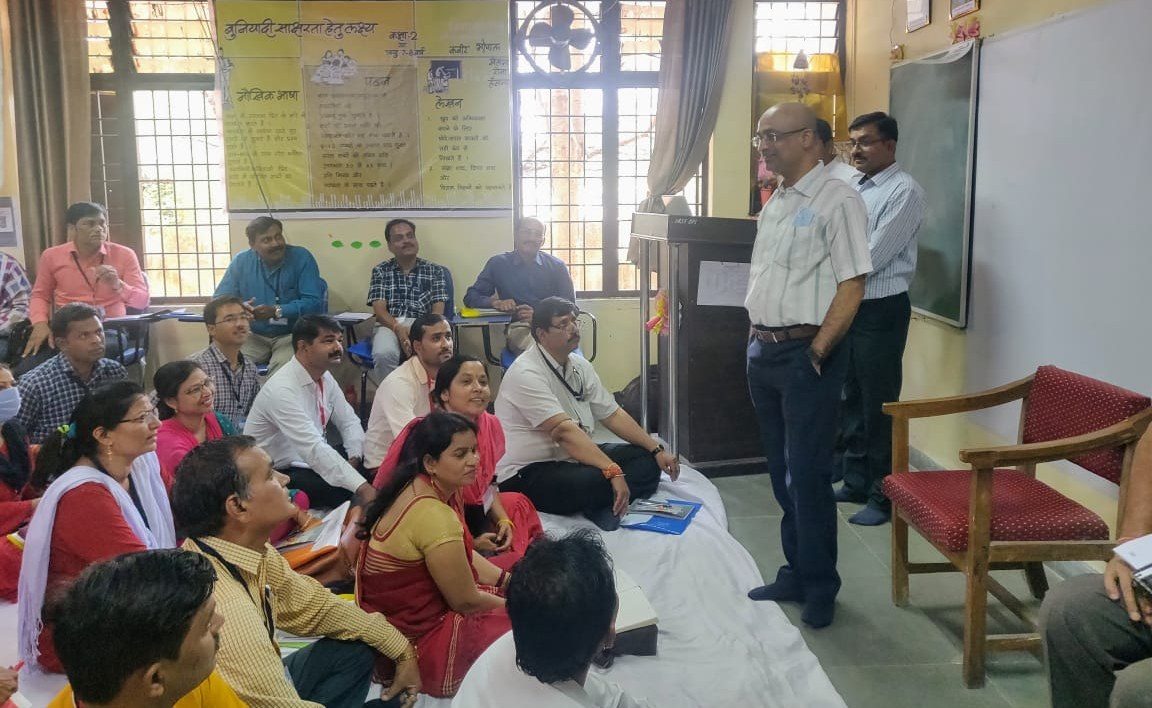
The National Education Policy (NEP) 2020 calls for meaningful professional development opportunities for teachers as a key lever for improving learning outcomes. NIPUN Bharat guidelines also highlight the significance of building teacher capacity to help children acquire foundational skills. This article looks at how states can effectively invest in teacher trainings on FLN to drive learning outcomes and highlights best practices from a recent teacher training conducted in Madhya Pradesh.