Suman Tyagi, a primary teacher, conducts an assesment of a student using a "NIPUN student tracker" app during a classroom session as part of Foundational Learning & Numeracy programme at Didoli village in Ghaziabad, Uttar Pradesh, India September 2024.
Prevail Fund/India/Srishti Bhardwaj
Strengthening Foundations: Uttar Pradesh’s Journey of Building Teacher Capacity at Scale
Improving foundational learning at the scale of Uttar Pradesh, where ~1.11 lakh primary schools (UDISE) and over 4.5 lakhteachers (State reported numbers) shape the early learning experiences of ~1 crore children (UDISE), across grades 1 to 5, is not a one time effort but a sustained, multi-year and pronged journey. Now in its fourth year, the state’s FLN teacher training programme reflects a clear recognition that year on year professional development of teachers is essential to deepen classroom practice, respond to evolving learner needs and keep pedagogy aligned with evidence.
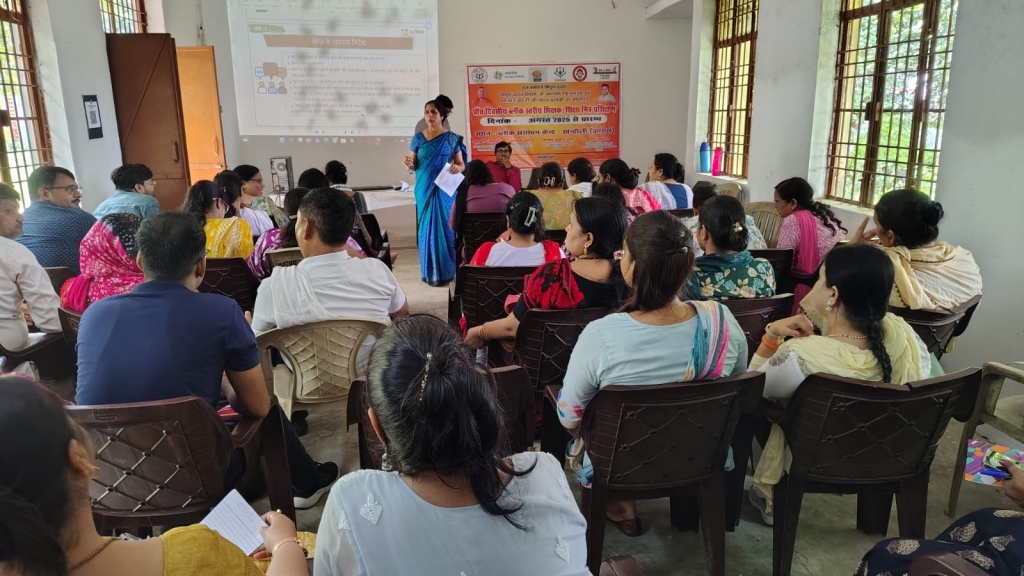
Teacher training, Sitapur, UP
Academic year (AY) 2025-26 marked an important milestone in this journey, with a 23.68% improvement in teacher understanding of key FLN competencies, as reflected in pre and post assessments. Beyond numbers, the shift signals how the teacher training programme matured under the NIPUN Bharat Mission, moving from content delivery to practice-based learning and deeper academic engagement. Teachers are increasingly asking more critical questions, engaging actively with demonstration activities and drawing clearer links between training and student learning. These gains sit alongside encouraging trends seen in large scale assessments such as Annual Status of Education Report (ASER) 2024 and Performance Assessment, Review, and Analysis of Knowledge for Holistic Development (PARAKH) Rashtriya Sarvekshan 2024, reinforcing the role of sustained teacher development in improving student learning outcomes.
Reimagining Teacher Development The state’s teacher training cycle for 2025-26 was guided by a clear conviction that teachers needed more experience in the form of practice, modelling and opportunities to connect instructional tools to real classroom situations. This prompted the state to rethink teacher development at scale.
Insights from mentor-led assessments and annual third-party evaluations formed the foundation of the redesign. Patterns in student performance consistently highlighted gaps in competencies such as place value, Subtraction, blending sounds, reading comprehension and oral language. These findings were consolidated at the state level to establish shared priorities and were directly addressed through hands-on, competency-aligned training modules, with the intent of translating field insights into stronger classroom transactions and improved student learning.
A key structural shift was the introduction of an Annual Teacher Training Timetable, bringing predictability across state, district and block levels. This was complemented by the State-level Master Trainer Workshop at SIEMAT (State Institute of Education Management and Training), where master trainers and academic partners refined modules, modelled facilitation practices and aligned on expectations. Building on SIEMAT’s growing experience in anchoring large-scale training, this ensured a unified understanding of content and intent before training reached classrooms. Overall, the vision was to create a training system that was continuous, classroom-centred, data-informed and responsive to learner needs.
Implementing at Scale: A System That Learns and Leads
Executing a programme of this magnitude requires both precision and flexibility. Uttar Pradesh’s 2025-26 rollout demonstrated how a large system can deliver well with coherence.
Multi-tier cascade from SIEMAT to districts and blocks
What set this year apart was the transition from before, largely theory-driven sessions to experience-based learning, rooted in classroom practice. Teachers engaged with videos, case studies, activities centred around teaching-learning material, blending routines and guided reading demonstrations that brought classroom practice to life. Pre and post assessments showed improvement across key literacy and numeracy competencies, with an overall gain of 23.68% and the strongest growth in Grade 3 English at 28.75%.
As Ranjeev Veer P. Singh (teacher) from Sitapur shares, “The demonstrations helped me understand exactly how to break down a concept for children. I finally feel confident using the Teacher Guide the way it was designed. This training has given me a new direction and confidence in fulfilling my academic responsibilities.”
Ranjeev Veer P. Singh, Teacher, Composite School, Nimtapur, Sitapur, UP
District Project Management Units (DPMUs) also emerged as centres of innovation — from recap routines like Prativedan in Jhansi to tech-enabled interactions in Gorakhpur and creative TLM development in Ghazipur — turning training into a shared learning movement rather than a mandate.
Technology as an Enabler: From Monitoring to Motivation
If scale and quality were the backbone of this year’s training, technology became the bridge holding it together.
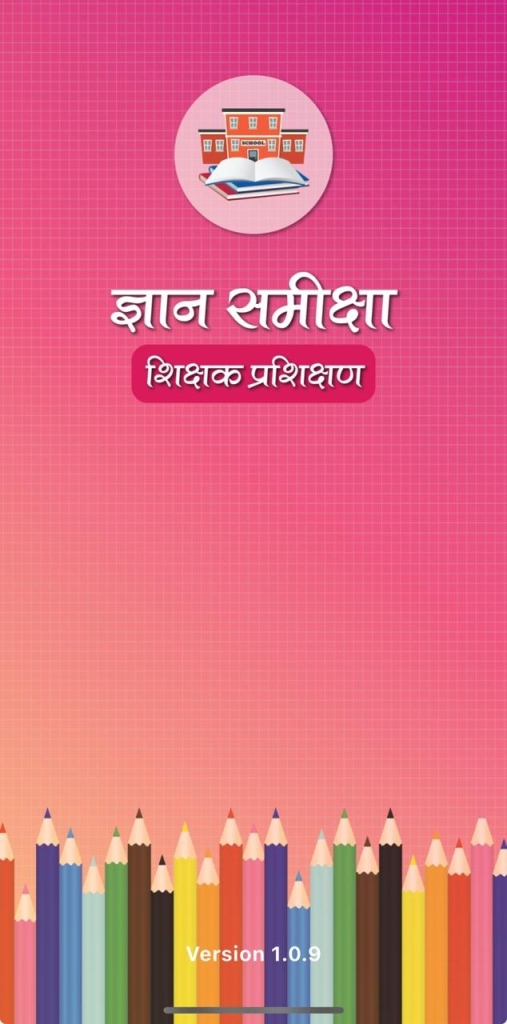
Gyan Samiksha App One persistent challenge in Uttar Pradesh has been the absence of a unified system to track teacher training attendance and learning outcomes. With multiple trainings running across districts, visibility was fragmented. To address this, the Gyan Samiksha App was conceptualised under the leadership of the Director General, School Education (DGSE) as a single, state wide monitoring platform.
Gyan Samiksha App
Developed with Technosys and integrated with the Prerna Portal, the app enabled real time attendance capture, pre and post assessments and session feedback across all 885 blocks. The impact was immediate: attendance reporting improved, visibility increased and the state was able to intervene promptly, ensuring training stayed on track throughout the cascade.
NIPUN Teacher App While the five-day face-to-face training created a strong foundation, it also reinforced an important insight that a teacher’s desire to learn could not be limited to a few days of structured training. Teaching practice evolves continuously inside the classroom and teachers need ongoing access to support, reflection and learning opportunities that extend well beyond the formal cascade. The NIPUN Teacher App was introduced to respond to this need and to nurture a culture of continuous professional development among teachers.
NIPUN Teacher App
Through short courses, quizzes, videos and competency-linked learning pathways, the app enables teachers to continue learning at their own pace. The platform is mapped to 56 FLN teacher competencies, with all courses directly linked to DIKSHA, ensuring alignment with national content repositories. While this content already exists on DIKSHA, the NIPUN Teacher App functions as a simplified, teacher-friendly interface — organising materials in a structured manner and layering them with quizzes, gamified elements and progress tracking to make self-learning intuitive, engaging and easy to navigate.
Teacher engagement on the platform has been encouraging. Over 1.94 lakh teachers from 75 districts have enrolled on the app so far and nearly 72,000 teachers have accessed courses and quizzes. Teachers are not only signing up, they are returning to learn. Collectively, they have attempted nearly 9.7 lakh quizzes and completed 3.8 lakh courses, with each active teacher completing an average of 13 quizzes, clearlyindicating sustained engagement and intrinsic motivation to strengthen classroom practice.
As Priyanka Rastogi (teacher) from Ghaziabad shares – “The app shows me exactly which competencies I need to improve. I feel more prepared because I can learn at my own pace.”
Priyanka Rastogi, Assistant teacher, Primary School Matiyala, Ghaziabad, UP
These platforms did more than digitise processes. They connected teachers to their own learning, turning teacher professional development into a habit rather than an event.
The Road Ahead: Building a System That Learns and Evolves While the 2025-26 cycle marked a turning point, the focus of the next phase lies in deepening the shift toward a continuous, competency-based professional development system by using assessment data to tailor training, analysing app insights to identify gaps, strengthening mentor cadres and institutionalising follow up support. At its core, the system continues to honour a simple principle: when teachers learn, students thrive and this story is just about that. It demonstrates that when educators are trusted, supported and equipped with the right tools, even the largest systems can deliver foundational learning that is rigorous, responsive and rooted in classroom realities.